Athletes + seasons
Yoga for Tennis and Pickleball Players in Suwanee
The short answer
Yoga helps tennis and pickleball players by easing the shoulders, hips, calves, and low back that take the most wear from quick side-to-side play. At Sathya Hot Yoga & Wellness in Suwanee, GA, a weekly class can keep you moving well between matches.
Tennis and pickleball are fun, social, and very good for you. They also ask for sudden stops, quick pivots, and a lot of reaching. After a few games, many players feel it in the shoulder, the knees, or the calves.
Yoga gives your body a slower, steadier kind of movement to balance that out. At Sathya Hot Yoga & Wellness in Suwanee, Georgia, racquet players are a welcome part of our community.
Why does yoga work well for racquet sports?
Both sports repeat the same motions on the same side of the body. That can leave one shoulder tighter than the other, or one hip doing more than its share. Yoga works both sides evenly and lets you notice the difference.
Balance matters too. Standing poses train the small muscles in your feet and ankles. That steady base can help you feel more ready when a ball pulls you wide.
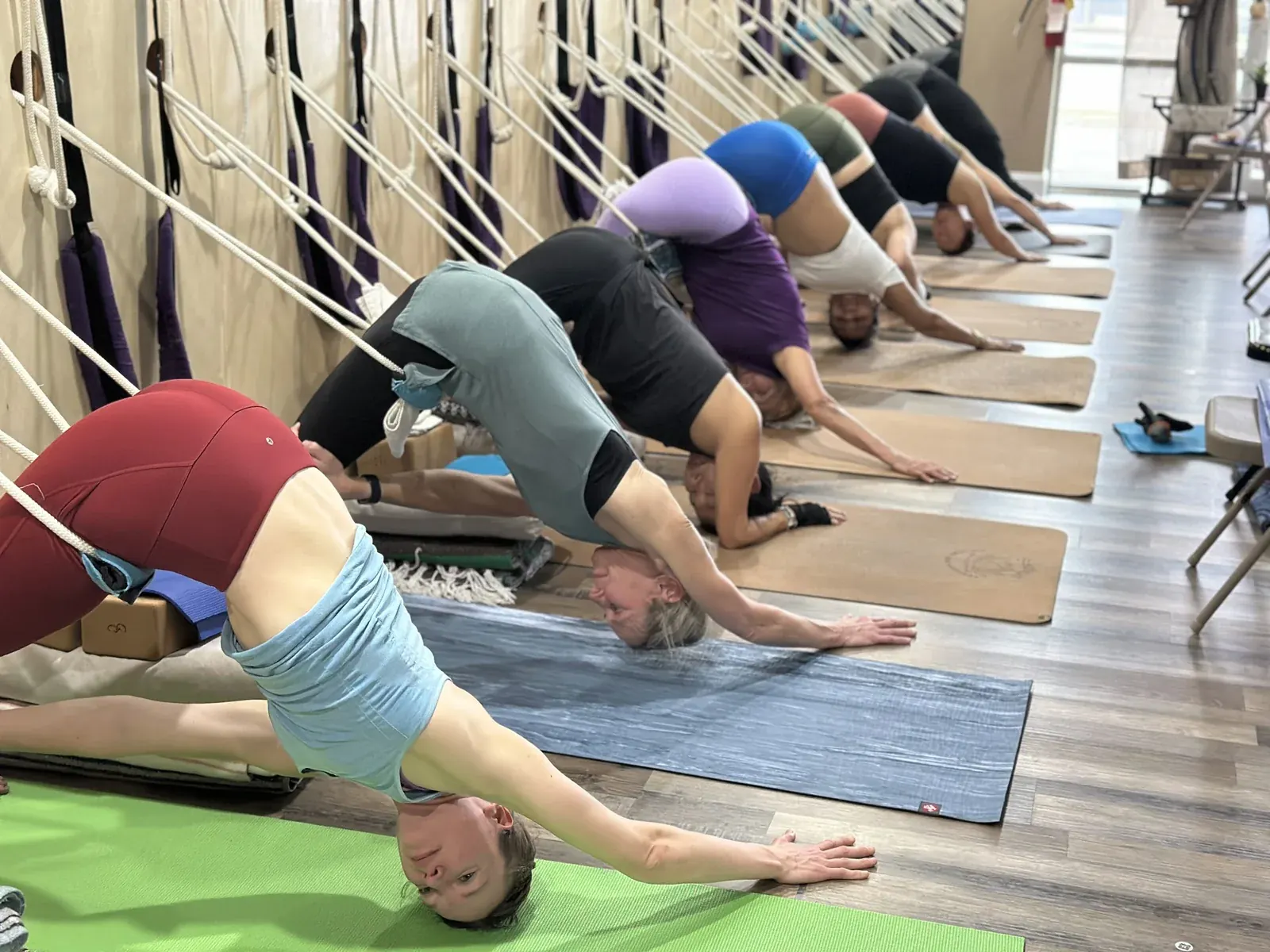
Which stretches help the most?
You will meet these in many of our classes. Each one fits the way you play.
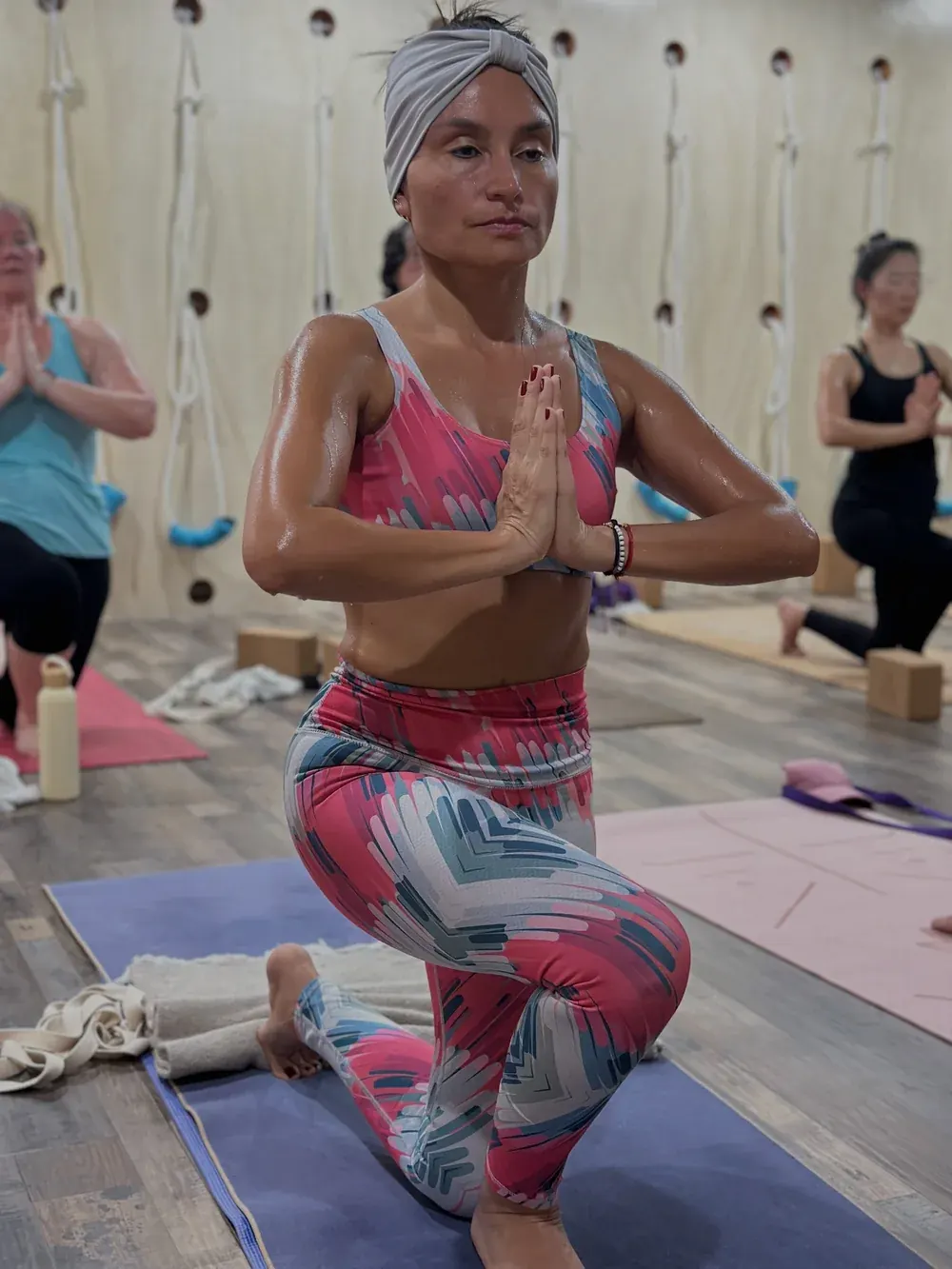
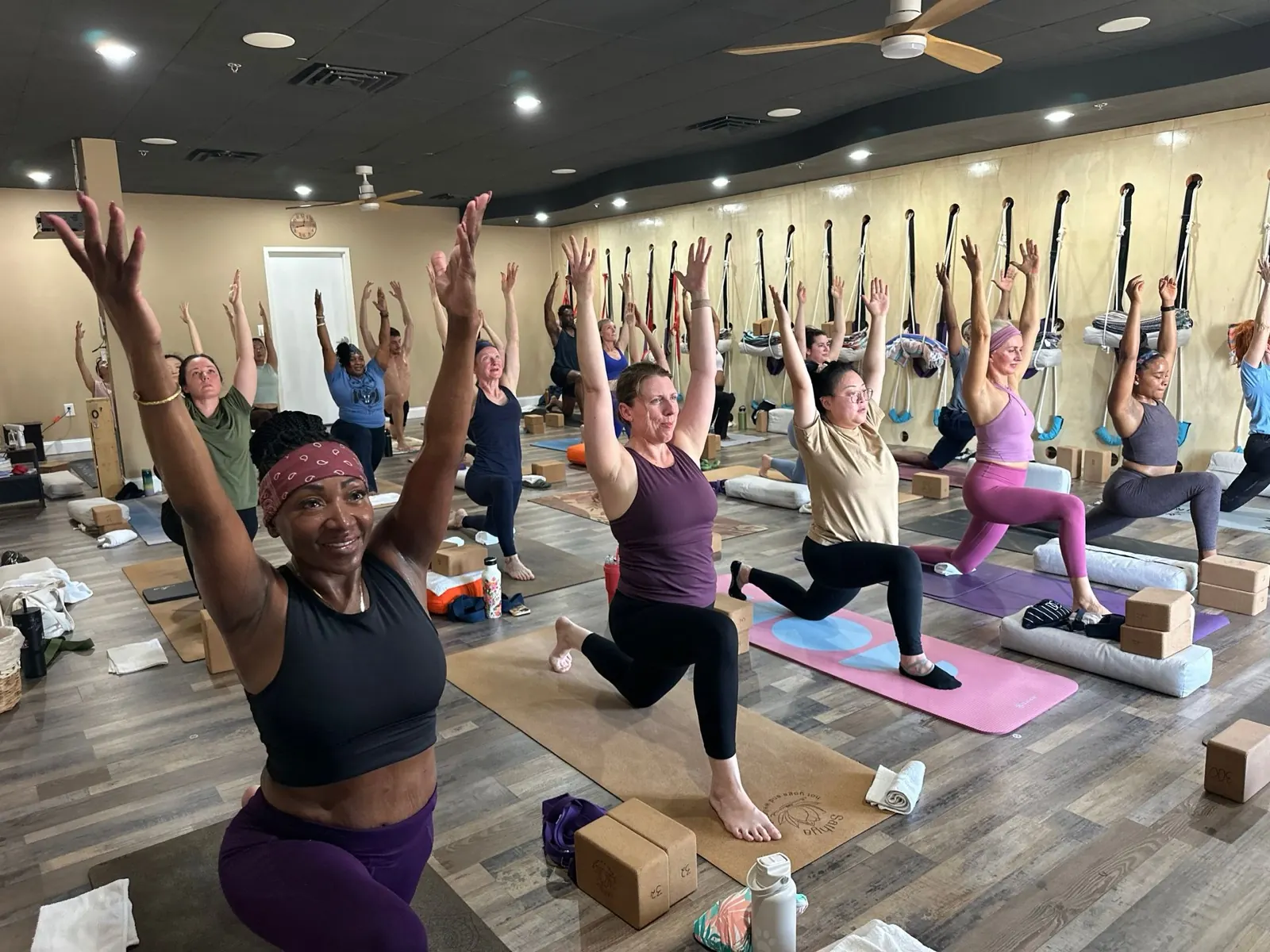
- Low lunge with a reach: opens the hip flexors you use on every lunge to the net.
- Downward dog: stretches calves, hamstrings, and shoulders at once.
- Thread the needle: eases the upper back and the shoulder you swing with.
- Pigeon pose: opens the outer hips after a day of side-to-side steps.
- Wrist and forearm stretches: give some relief to your grip hand.
Hold each stretch for several slow breaths. Do not bounce, and do not push into pain.
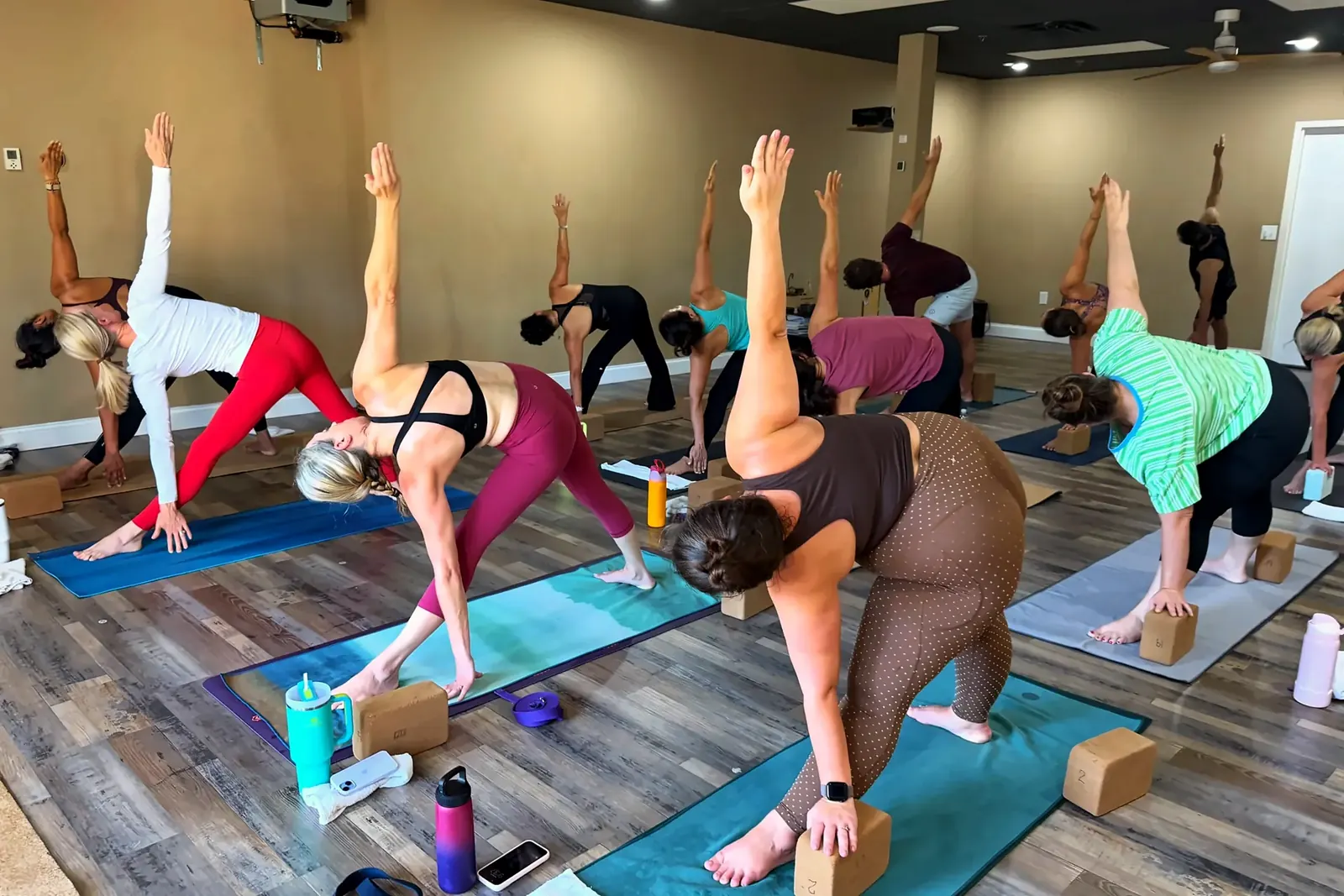
How can you recover between matches?
If you play a few times a week, recovery is part of your game. A simple routine can help: drink water, eat a real meal, and spend some quiet time stretching.
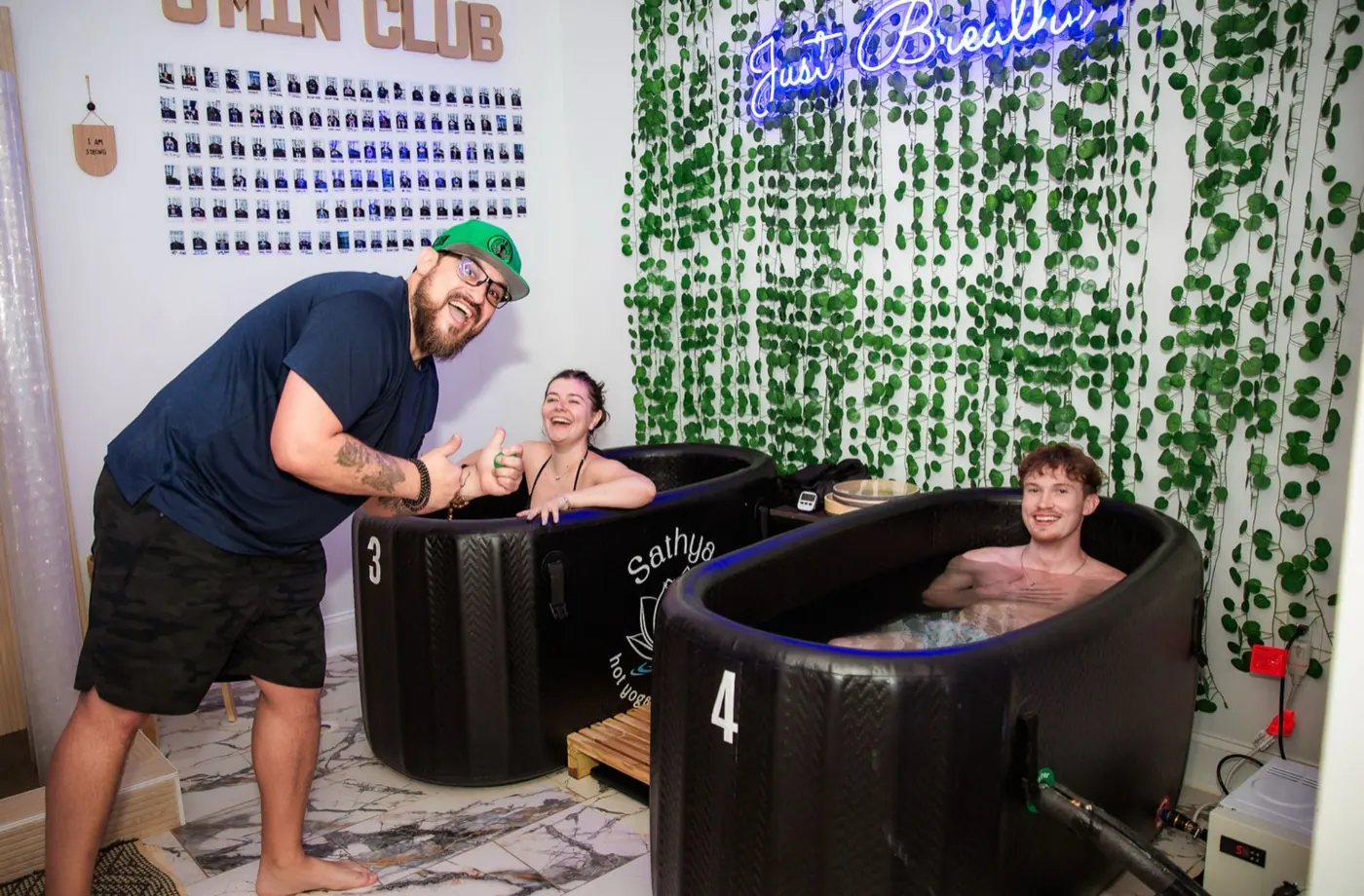
At Sathya, you can add a cedar sauna visit after play. Many people find the warmth soothing for tired legs. The cold plunge is there for those who like a bracing finish. Hot showers and lockers make it easy to clean up before you head back out.
Should you try the heated or non-heated studio?
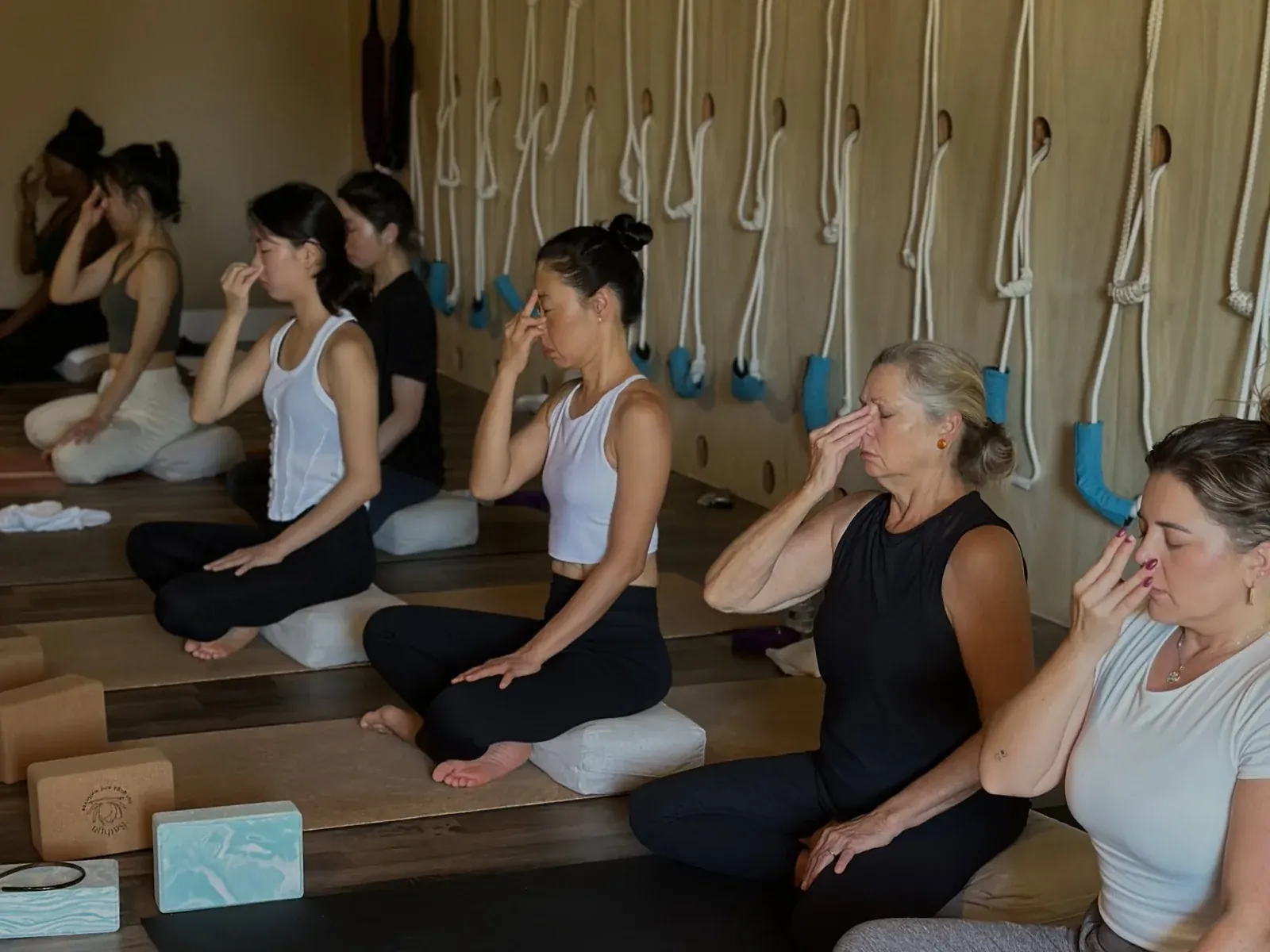
Pick based on how your body feels. The heated studio helps many people feel loose and warm. The non-heated studio is a gentler space and works well on days when you are sore or heading into a tournament. Our strength and Pilates classes are also a good fit if you want extra core work to support your swing.
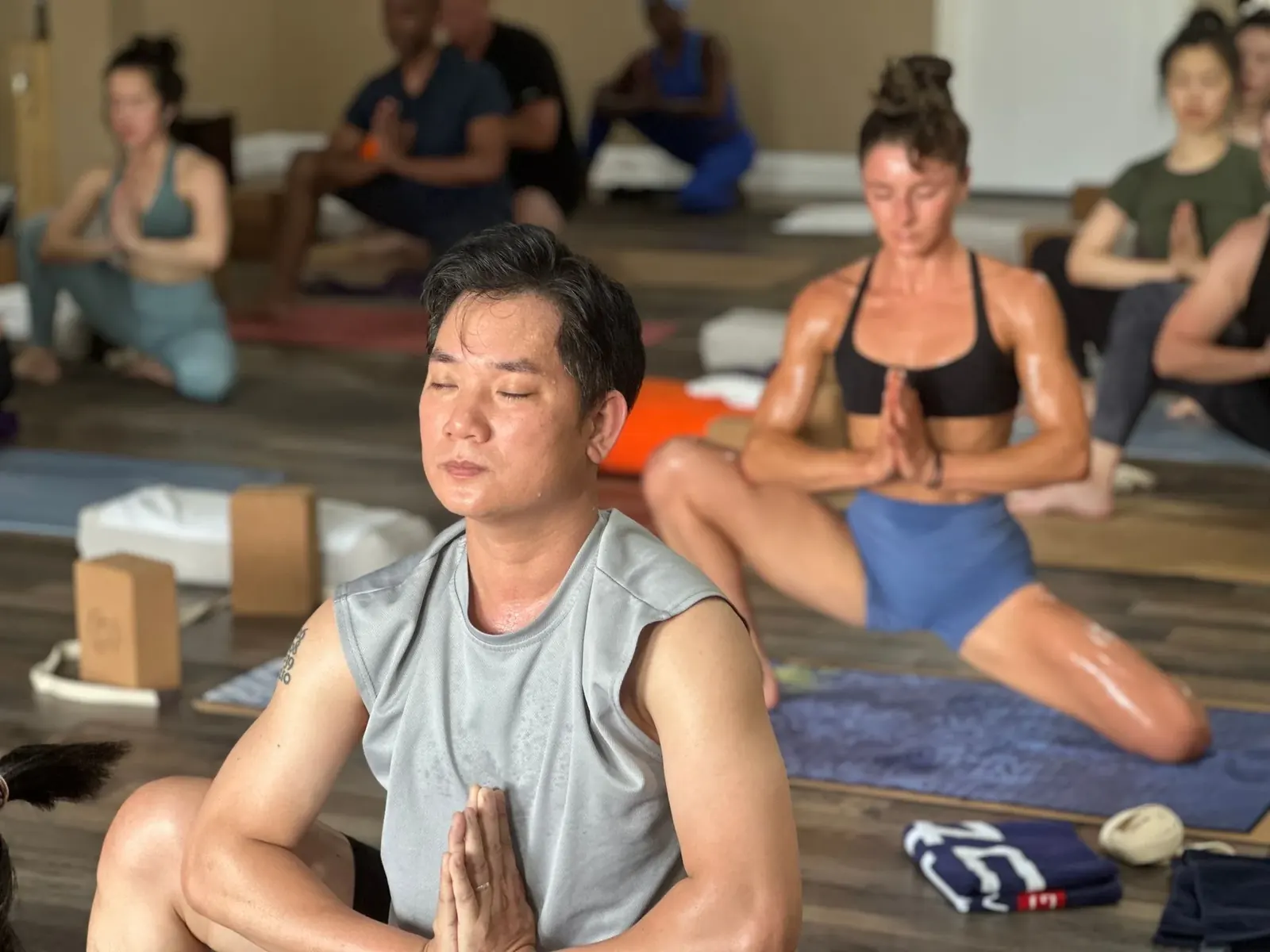
Is yoga good for older players who want to keep playing?
Many players want to stay active for years to come. Yoga can help with balance, steadiness, and flexibility at any age. Go at your own pace, and let the teacher know if you have any injuries or limits. If you have a health concern, check with your doctor first.
Protecting your shoulders and knees
Two spots take a lot of wear in racquet sports: the hitting shoulder and the knees. Yoga cannot promise to prevent soreness, but it can help you notice early signs and keep the surrounding muscles awake. Strong legs in chair pose and warrior poses, plus open shoulders in thread the needle, give you a more even base.
A quick routine for the court
Try this before you play, even in the parking lot:
- Five slow breaths while reaching your arms overhead.
- Ten leg swings on each side.
- A gentle lunge with a reach toward the sky.
- Arm circles, small to large.
After you finish, walk for a few minutes and stretch calves, hips, and shoulders. Then drink some water. This small habit pays off over a season of games, especially if you play several times a week with friends or in a local league.
Why consistency beats intensity
Many racquet players try to cram stretching into the night before a big match. A better habit is a little each week. One calm class, plus a few minutes of stretching after you play, adds up over a season. You will also learn what your body needs, which helps you decide when to play hard and when to back off. Players of every age and level are welcome, from first-timers to seasoned league regulars.
Can a league, club, or academy book a session?
Yes. We host groups of all sizes, from a doubles team to a full league. Take a look at our teams and athletes page for details on group recovery and mobility sessions.
Want to see what a class feels like first? Start with 2 weeks of unlimited classes for $49. You can view every option in our pricing section. Come straight from a match if you like. Hot showers and lockers are on site.
FAQ
Questions people ask
Is yoga good for tennis elbow or sore shoulders?
Gentle stretching can feel good for tight arms and shoulders. For pain that lingers, see a doctor or physical therapist. Tell your teacher about it so they can offer easier options.
Can I come to class right after a match?
Yes, as long as you are hydrated and feel okay. A slower class can serve as a cooldown. Many players choose the non-heated studio after hard play.
How many classes a week should I take?
One or two classes a week is a good start for most players. Add more if you enjoy it. Keep at least one class gentle so your body can rest.
Do you have classes for beginners?
Yes. Every class welcomes new students, and teachers offer options for different levels. Tell the teacher it is your first time and they will guide you.
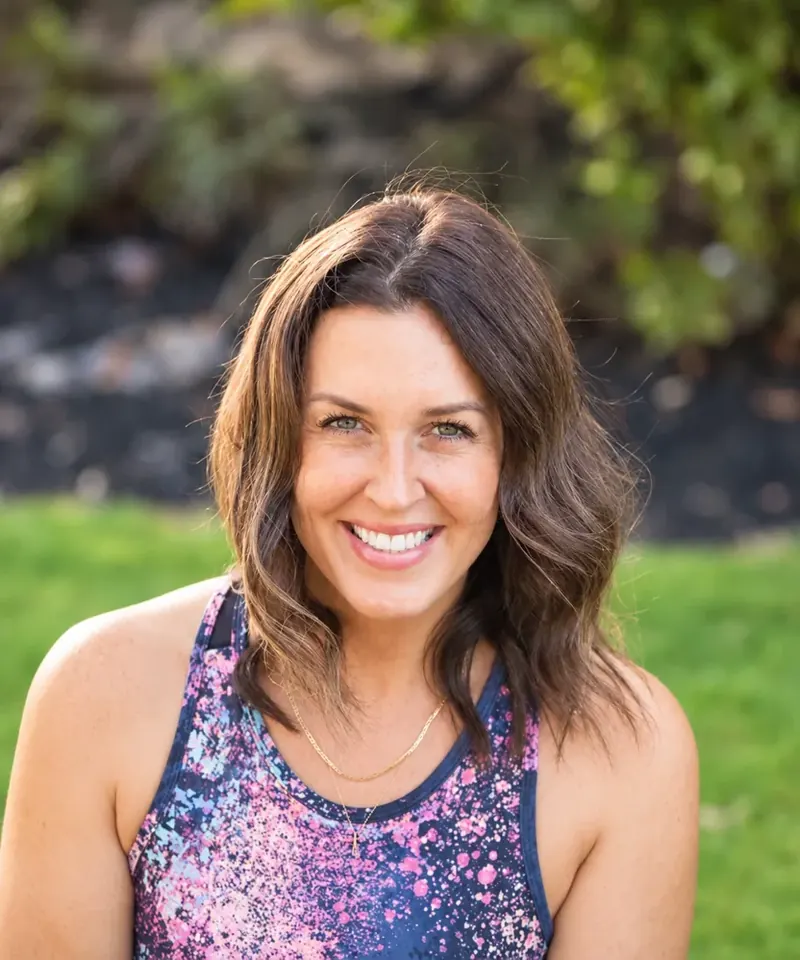
From the Sathya team. Kim Johns and Gigi Gomez opened Sathya Hot Yoga & Wellness in Suwanee in August 2024: two studios, a cedar sauna, a cold plunge and a rope wall. Working in, not working out.
Your first class
Reset, rest, community.
Two weeks of unlimited classes for $49. Credited toward your first month if you join.
Keep reading